
Ecosystems
Many fisheries worldwide have been transitioning to ecosystem approach to fisheries management (EAFM) in recognition that their fishing activities have broader impacts than on target species alone. However, quantifying fishing and other anthropogenic impacts (e.g., climate change) is incredibly difficult for complex ecosystems. An excellent way to understand the multidimensional relationships between species, fisheries and environment in marine ecosystems and simulate potential future perturbations is to use ecosystem model, such as trophic mass-balance models like Ecopath with Ecosim.
Thermocline has in-house expertise to build ecosystem models from the ground up, from determining the most appropriate model structure to test specific hypotheses, collating best available biological, ecological, fisheries and climate data for model parameterisation, model balancing, running and interpreting model diagnostics, fitting to data time series, to finally simulating scenarios and interpreting the model outputs, such as variations in biomass, catch and ecological indicators, which can be used to guide management.
Thermocline staff have been at the forefront on marine ecosystem model development by developing models for:
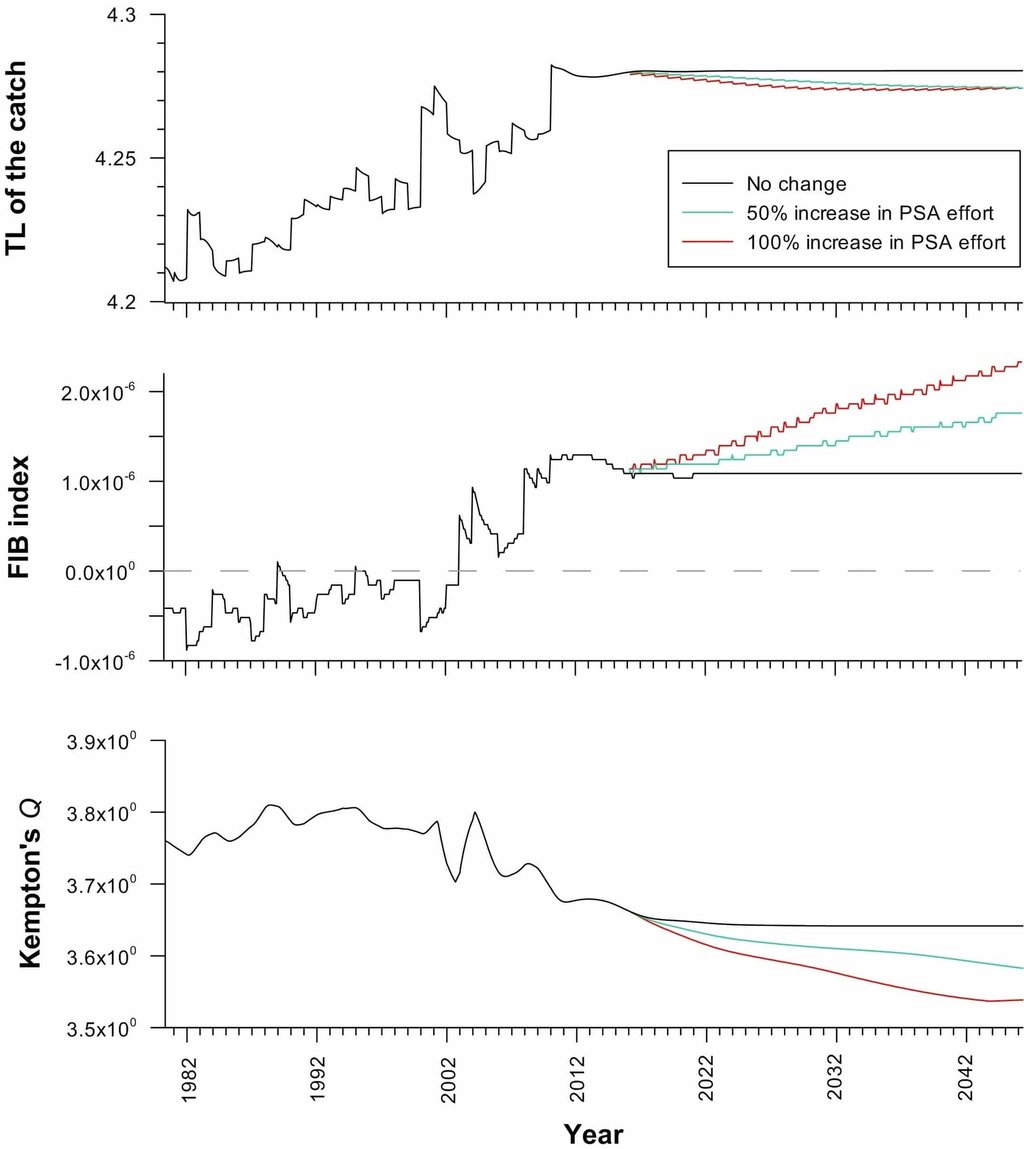
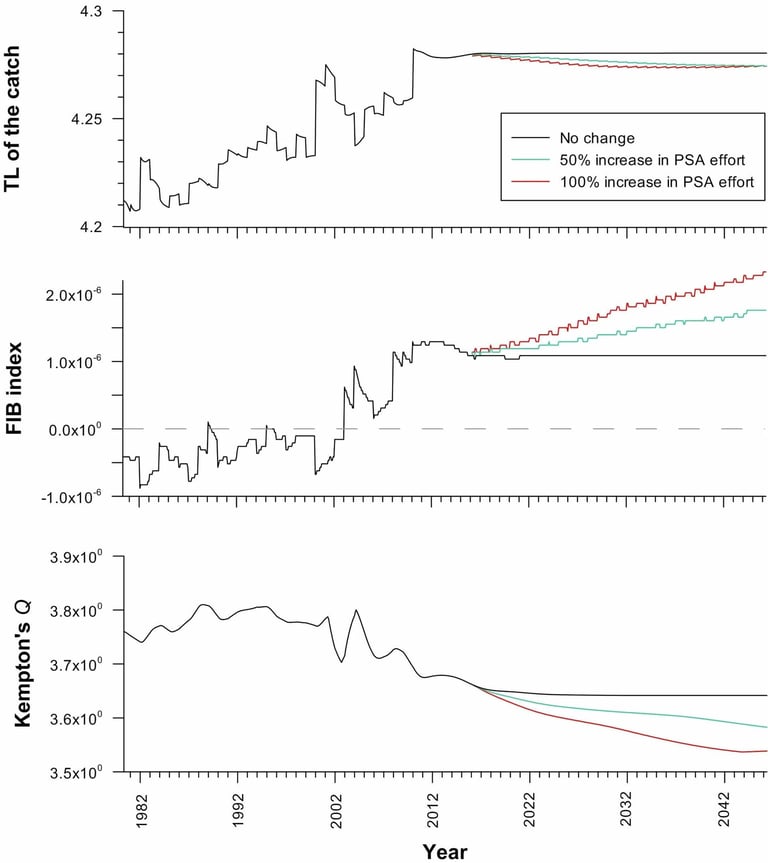
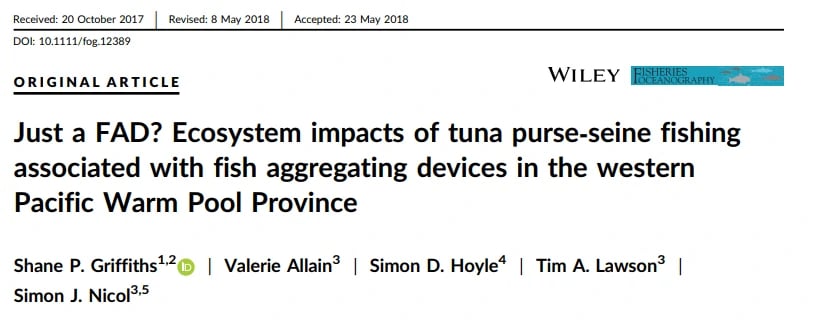
- Impacts of Fish Aggregating Devices (FADs) by the world's largest tuna fishery in the western and central Pacific Ocean https://doi.org/10.1111/fog.12389
- Assessing the ecological impacts of trawling and illegal foreign shark fishing in the Gulf of Carpentaria and northern Australia https://doi.org/10.1111/j.1467-8489.2008.00420.x
- Annual monitoring of ecological indicators and impacts of tuna fishery FAD use in the Eastern Pacific Ocean. Download report
- Assessing the ecological impacts of longline fishing and climate change on the pelagic ecosytem off eastern Australia. Download paper
Copyright © 2026. All rights reserved


Postal address:
PO Box 75
Pottsville NSW 2489
Australia